Plumbing is one of the few industries where demand never disappears — pipes burst at 2 AM, drains clog on holidays, and water heaters die in the dead of winter — yet most plumbing businesses still struggle to keep their schedules full because they're chasing the wrong leads with the wrong strategies.
The plumbing industry is growing faster than most home services, but so is the competition for quality customers. With 90% of consumers turning to the internet to find local businesses, showing up where it counts isn't optional anymore — it's the difference between a full truck and an empty calendar.
This guide cuts through the noise. You'll find 12 proven lead generation strategies — from local SEO and Google ads to referral programs and marketing automation — complete with real cost benchmarks and steps you can act on today. Whether you're a solo plumber trying to replace word-of-mouth with something more reliable, or managing a multi-truck operation ready to scale, these strategies are built to generate leads that don't just trickle in — they convert into booked jobs.
What Are Plumbing Leads (And Why Quality Matters More Than Quantity)
A plumbing lead is any potential customer who has taken a specific action that signals interest in your services — a phone call, a form submission on your website, a chat message, a direct message on social media, or even a click on your Local Services Ad. The key word is action. Someone who drives past your truck wrap hasn't become a lead yet. Someone who picks up the phone at 11 PM because their basement is flooding? That's a lead — and a high-value one at that.
But not all leads are created equal, and treating them as if they are is one of the most expensive mistakes a plumbing business can make.
Understanding Lead Types
Plumbing leads generally fall into two structural categories and two service categories:
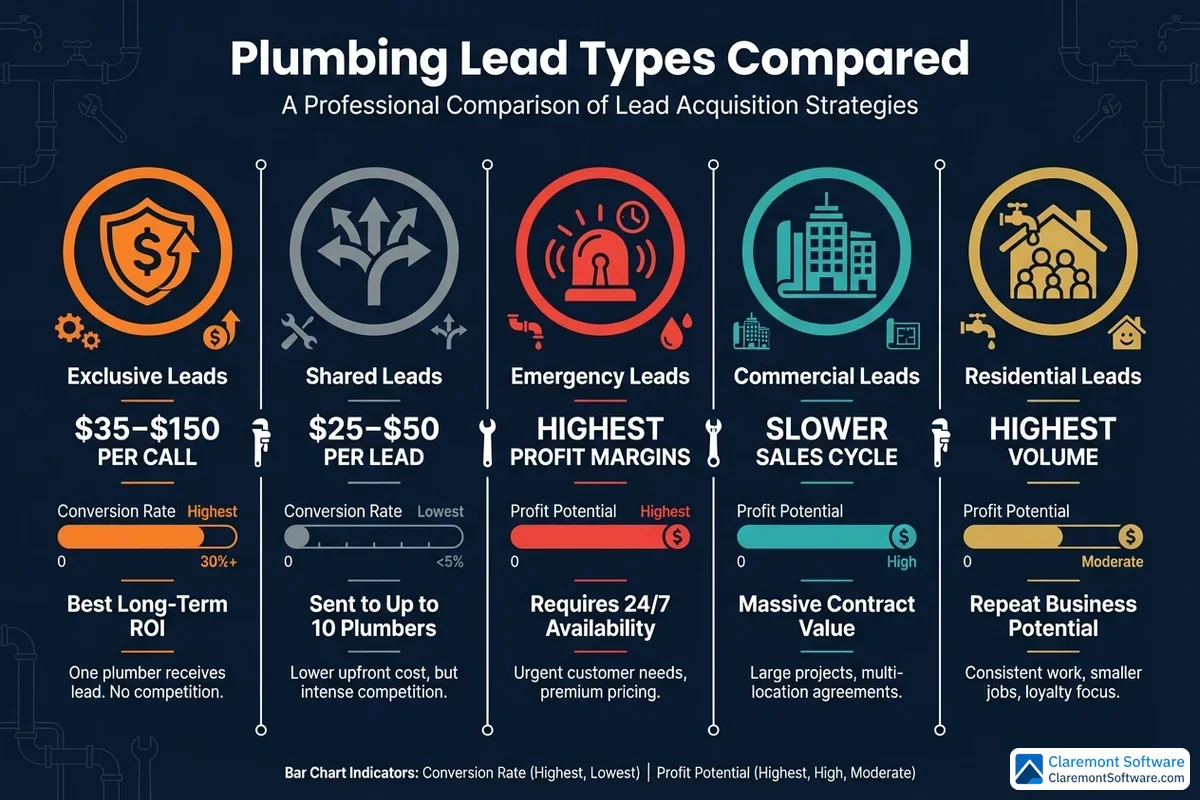
- Exclusive leads are sent to you and only you. Whether they come from your own website, a referral, or a paid service, you're the only plumber in the conversation. These leads convert at significantly higher rates because there's no bidding war.
- Shared leads — the kind sold by platforms like HomeAdvisor — are distributed to anywhere from 3 to 10 competing plumbers simultaneously. At $25–$50 per lead, they might seem affordable, but when five plumbers are calling the same homeowner within minutes, the only way to win is to be the cheapest or the fastest. That's a race to the bottom that erodes your margins and your brand.
On the service side:
- Emergency leads (burst pipes, sewage backups, no hot water) require 24/7 availability and fast response times, but they command premium pricing and rarely involve price shopping. A homeowner with water pouring through their ceiling isn't comparing quotes.
- Scheduled and commercial leads move more slowly. A property manager sourcing a plumber for a 20-unit building will take longer to convert, but that contract could be worth more than 50 individual residential jobs.
Why Lead Quality Scoring Matters
Not every lead deserves the same urgency or investment of your time. A framework for scoring leads — based on factors like service type, location within your service area, whether the contact provided a phone number, and how they found you — helps you prioritize the leads most likely to convert at the margins you need. An exclusive inbound call from someone searching "emergency plumber near me" scores far higher than a shared lead from a directory platform where four competitors are already dialing.
The bottom line: volume is vanity, quality is sanity. Fifty shared leads that convert at 10% will cost you more in time and money than ten exclusive leads that convert at 60%.
Local SEO: The Foundation of Free Plumbing Leads
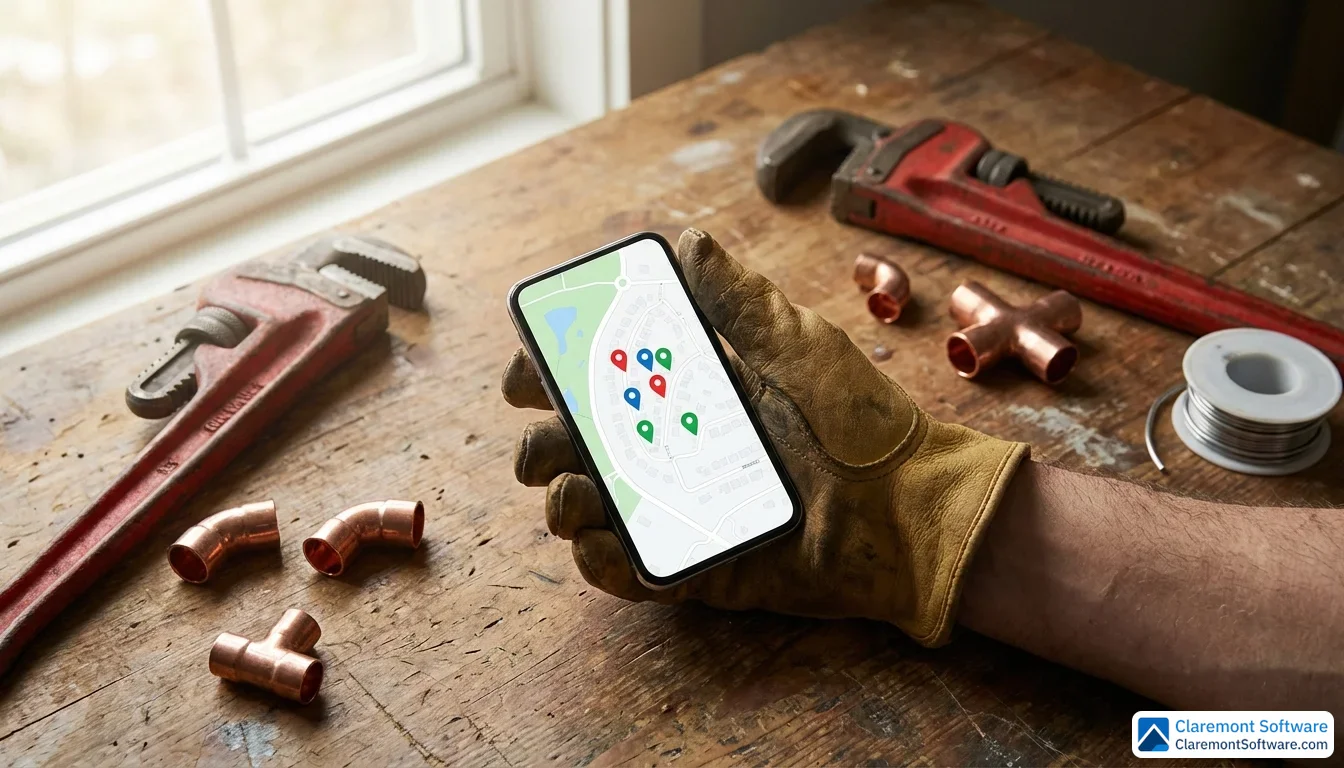
According to SEMRush, 80% of US consumers search for local businesses every single week. That means if your plumbing business isn't showing up in local search results, you're not just missing a few leads — you're invisible to the majority of homeowners in your area who are actively looking for exactly what you offer. Plumber SEO is how you fix that, and unlike paid advertising, the leads it generates don't stop the moment you turn off your budget.
Start With Your Business Profile on Map Platforms
Your business profile on map and search platforms is the single highest-leverage asset in local SEO. When someone searches "plumber near me" or "emergency plumber in [city]," the map results appear before organic website listings — and before most paid ads. To compete for those spots, your profile needs to be fully built out, not just claimed.
That means completing every available field: business hours (including holiday hours), service categories, service area, phone number, website link, and a detailed business description that naturally includes your primary services and location. Choose your categories carefully — your primary category should be as specific as possible (e.g., "Plumber" rather than "Contractor"). Add new photos consistently, ideally weekly — job site photos, team photos, and before/after shots all signal to search algorithms that your business is active. Use the posts feature to share updates, promotions, or seasonal tips. Profiles that are regularly updated tend to rank higher than dormant ones, even when the dormant profile has more reviews.
NAP Consistency Is Non-Negotiable
NAP stands for Name, Address, and Phone Number — and these three pieces of information need to be identical across every online directory where your business appears. That includes Yelp, Yellow Pages, and any other local citation site. Even a minor inconsistency — "St." versus "Street," a missing suite number, or an old phone number that was never updated — can create conflicting signals that suppress your local rankings. Conduct a citation audit at least once a year and correct any mismatches you find.
Build City-Specific Service Pages
Your website plays a critical supporting role in local SEO. Rather than relying on a single homepage to rank for every service in every neighborhood you cover, build dedicated pages for each service-and-location combination: "Drain Cleaning in [City]," "Water Heater Repair in [Neighborhood]," and so on. This matters because over half of all local clicks come from long-tail or hidden keyword terms that broad pages simply won't capture. Keyword research tools often miss hyper-local search terms entirely, which means the targeting itself is more important than the research — write naturally for your service area and trust that specificity will outperform generic content every time.
One Critical Warning
Never use a fake address, a virtual office, or a friend's address to expand your apparent service area on map platforms. This violates platform guidelines and can result in your profile being suspended — wiping out all the ranking authority you've built. Instead, set your profile to display a service area radius rather than a physical address if you operate from a home office or mobile base. It's a slower path to visibility, but it's one that won't collapse overnight.
Pay-Per-Click Advertising and Local Services Ads
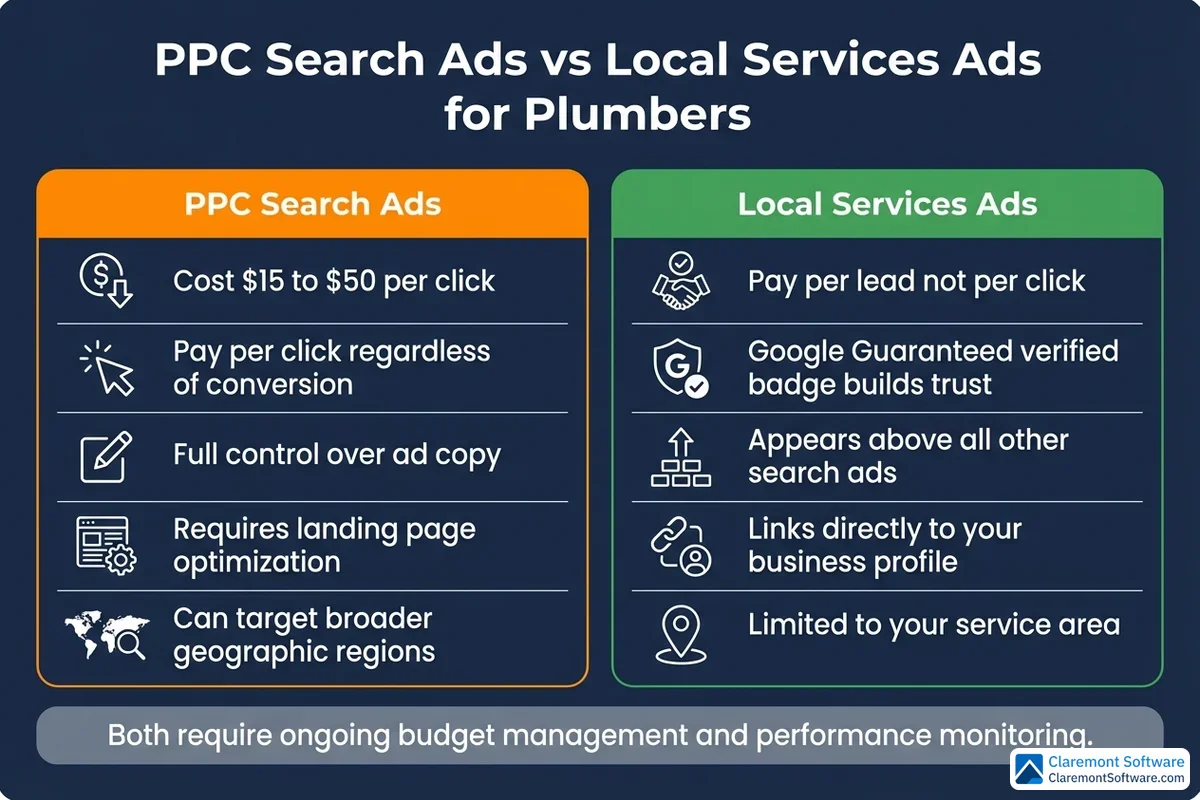
When your local SEO foundation is in place and organic leads are starting to flow, paid advertising becomes the accelerant — the way you capture demand right now rather than waiting months for search rankings to mature. For plumbers, there are two distinct paid channels worth understanding, and they work very differently.
Local Services Ads: The Trust Signal That Appears First
Local Services Ads (LSAs) are Google's pay-per-lead product designed specifically for service businesses, and they occupy the most valuable real estate on the search results page — above traditional paid ads, above the map pack, above everything. When a homeowner searches "emergency plumber near me" at midnight, LSAs are the first thing they see.
What makes LSAs particularly powerful is the verified badge that appears alongside your listing. Earning this badge requires passing a background check, verifying your license and insurance, and completing Google's screening process — which is exactly why it builds instant trust with homeowners who are letting a stranger into their home. The badge signals that you've been vetted, and that signal converts. Plumbers who complete the verification process consistently report higher lead volumes than those running unverified profiles, because the badge removes a key friction point in the decision to call.
Unlike traditional PPC, you pay per lead rather than per click, which means you're not burning budget on people who bounce without contacting you. LSAs typically deliver a lower cost-per-lead than traditional search campaigns, making them an efficient starting point for plumbers entering paid advertising for the first time.
Traditional PPC: Three Campaign Types Worth Knowing
Standard pay-per-click search campaigns give you more control over targeting, ad copy, and bidding strategy — but they come with higher costs and a steeper learning curve. For plumbers, three campaign types are most relevant:
- Search campaigns target high-intent keywords like "water heater replacement cost" or "drain clog repair" — people actively looking for a solution right now. This is where your budget should be concentrated.
- Display campaigns place visual banner ads across websites your potential customers visit, building brand awareness over time. Less immediate than search, but useful for staying top-of-mind in your service area.
- Video campaigns on platforms like YouTube can capture homeowners watching DIY repair content — people who may quickly realize the job is beyond them and need a professional.
Cost benchmarks are important to set expectations: competitive plumbing keywords typically run $15–$50 per click, with emergency service terms at the higher end of that range. Budget accordingly, and track every conversion carefully.
Ad Copy That Actually Gets Calls
Your ad copy needs to match the emotional state of the searcher. For emergency services, lead with urgency and availability:
- "Burst Pipe? We're Available 24/7 — Licensed Plumbers On Call Now"
- "Same-Day Emergency Plumbing — Serving [City] Since [Year]"
For scheduled work, shift to trust and credibility:
- "5-Star Rated Water Heater Installation — Upfront Pricing, No Surprises"
- "Licensed & Insured Drain Cleaning — Book Online in 60 Seconds"
Always include your service area in the headline or description, a clear call to action, and a phone number extension when possible. The goal is to give a stressed homeowner every reason to call you and no reason to scroll past.
Website Optimization: Your 24/7 Lead-Generating Salesperson
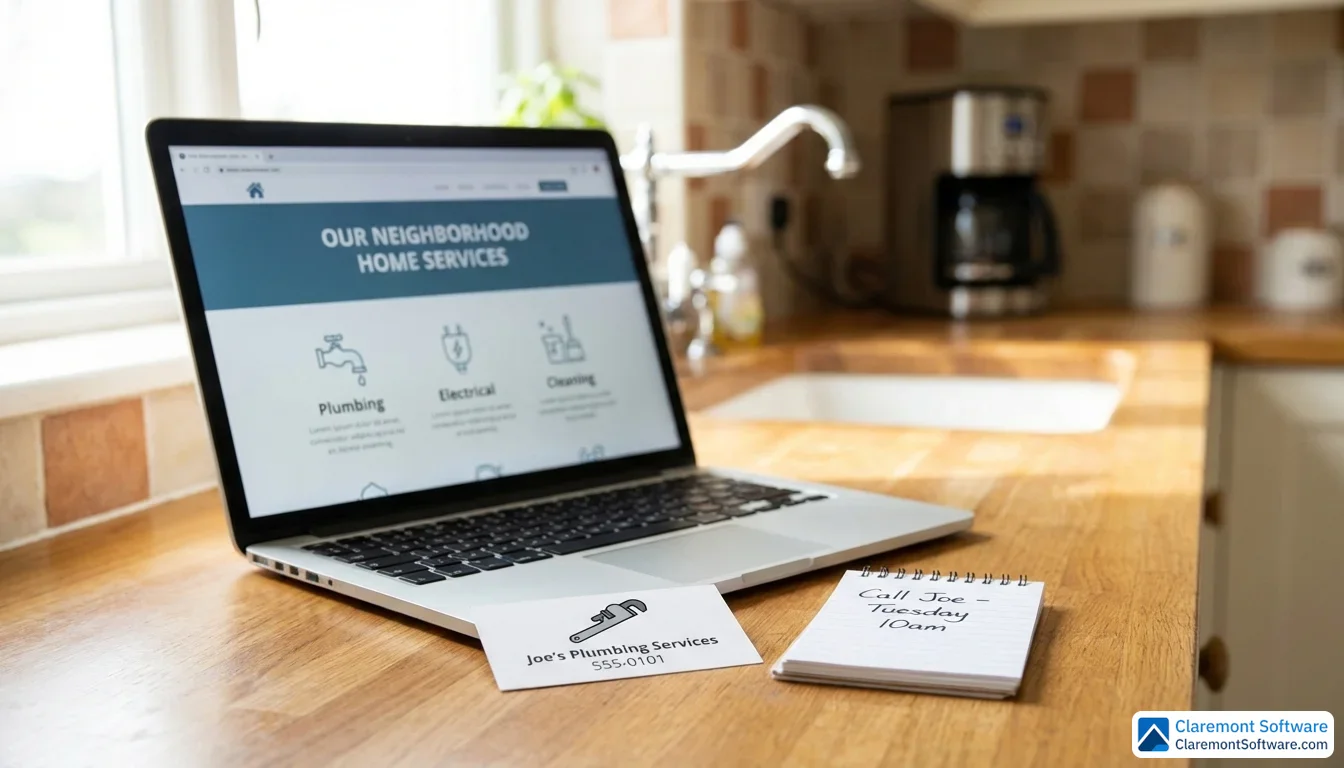
Your plumbing business might be closed at 2 AM, but the homeowner staring at a flooded basement is still searching for help. If your website isn't built to capture that lead — load fast, communicate trust instantly, and make it effortless to reach you — that job goes to a competitor whose site does. Think of your website not as a digital brochure, but as your best salesperson: one who never sleeps, never calls in sick, and works every holiday. For concrete proof of what that looks like in practice, study the best plumber websites in the industry — they all treat the site as their top-performing sales asset.
Speed and Mobile Performance Are Non-Negotiable
More than half of all local service searches happen on mobile devices, often in high-stress moments. If your site takes more than three seconds to load, a significant portion of visitors will leave before they ever see your phone number. Run your site through a free speed testing tool and prioritize fixes like image compression, caching, and clean code. If you would rather not watch that every month, our website maintenance plans cover performance monitoring for you. Fast, mobile-first plumber website design isn't a luxury — it's the baseline expectation for any plumbing business competing for leads in 2026.
Make Your Location Unmistakably Clear
Your homepage should leave no doubt about where you operate. Include your target city in the title tag, the H1 heading, and naturally throughout your primary content. Feature your service area address prominently — ideally in the header and footer of every page. This isn't just good for local SEO; it immediately reassures a homeowner that you actually serve their neighborhood, which removes a key hesitation before they pick up the phone.
Conversion Rate Optimization: Remove Every Barrier to Contact
Getting traffic to your site is only half the battle. The other half is converting that traffic into actual calls and bookings. A few high-impact elements make the difference:
- Sticky click-to-call buttons that remain visible as users scroll — especially critical on mobile, where tapping a number should be a single, effortless action
- Above-the-fold booking forms that don't require users to hunt for a way to reach you — if they have to scroll to find your contact information, many won't bother
- Trust badges displaying your license number, insurance status, and any industry certifications — these reduce the anxiety of inviting a stranger into your home
- Real customer photos of your team, your trucks, and completed jobs — stock photography signals inauthenticity, while genuine images build the kind of trust that converts browsers into callers
Dedicated Service Pages for Every Offering
A single "Services" page trying to rank for drain cleaning, water heater repair, sewer line replacement, and everything else you offer will rank well for none of them. Build individual pages for each service, each targeting its own specific keywords and addressing the questions homeowners actually ask. A well-structured service page for "water heater repair" should explain common symptoms, your process, pricing transparency, and a clear call to action — giving both search engines and potential customers exactly what they're looking for.
Capture Leads Around the Clock With Chat
Even a perfectly optimized website loses leads when no one is available to answer questions after hours. Integrating an AI chatbot or live chat widget ensures your site is actively collecting contact information and qualifying leads at midnight just as effectively as at noon. A well-configured chatbot can ask for the caller's name, location, and the nature of their plumbing issue — so when your team arrives in the morning, they have warm, pre-qualified leads ready to book rather than cold inquiries to chase.
Online Review Management: Turn Reputation Into Revenue
Your website captures the lead. Your reviews close the deal.
According to BusinessNewsDaily, 92% of consumers trust referrals from people they know — and in the digital age, online reviews function as exactly that. When a homeowner finds two plumbers with similar websites and comparable prices, they're going to call the one with 87 five-star reviews before they call the one with 12. Your reputation isn't just a vanity metric; it's a direct driver of booked jobs.
Build a Systematic Review Request Process
The biggest mistake plumbing businesses make with reviews is treating them as something that happens organically. They don't — at least not consistently enough to build a competitive advantage. You need a repeatable process: immediately after every completed job, send the customer a text or email with a direct link to your review profile. Not a vague request to "leave us a review sometime," but a single tap that takes them straight to the review form.
Timing matters. The window of peak customer satisfaction is narrow — it closes fast once the invoice is paid and life moves on. A message sent within an hour of job completion will outperform one sent the next day every time.
Respond to Every Review Within 24 Hours
Responding to reviews — positive and negative — signals to both potential customers and search algorithms that your business is active, engaged, and accountable. Thank customers who leave positive reviews by name, reference the specific job when possible, and keep it genuine rather than templated. A personalized response to a glowing review reinforces the experience and shows future readers that a real person is running this business.
A Framework for Handling Negative Reviews
Negative reviews sting, but how you respond to them often matters more than the review itself. Follow this three-step framework:
- Acknowledge the concern without being defensive — validate that their experience fell short of what you aim to deliver
- Take it offline by providing a direct contact number or email so the conversation can move to a private resolution
- Resolve publicly when possible — if the issue gets fixed, a brief follow-up response noting the resolution turns a negative into a trust-building moment for everyone reading
Never argue, never deflect blame onto the customer, and never ignore a negative review. Silence reads as indifference.
Automate Collection So Nothing Slips Through
Manual review requests are inconsistent — they depend on a technician remembering to send a message after a long day of jobs. Integrating review collection into your CRM or field service management software removes that dependency entirely. When a job is marked complete in your system, a review request triggers automatically. Every completed job becomes an opportunity, and no opportunity gets missed because someone forgot to follow up.
Referral Programs and Word-of-Mouth Marketing
Word-of-mouth has always been the lifeblood of local service businesses — but in 2026, the most successful plumbing companies aren't leaving it to chance. They're engineering it.
The data behind referral marketing is compelling enough to make it a strategic priority at any business size. According to Harvard Business Review, referred customers are up to 57% more likely to generate additional referrals themselves — meaning every referred customer you win has the potential to bring in more customers behind them. That's not a marketing channel; that's a compounding growth engine. Layer in the fact that referred customers tend to have a 16% higher lifetime value than those acquired through other channels, and the math becomes impossible to ignore.
Build a Structured Referral Program With Real Incentives
The difference between a referral program that works and one that doesn't usually comes down to structure. Vague encouragement — "tell your friends about us!" — produces vague results. A program with clear, tangible incentives produces referrals you can count on.
Design your program so both sides benefit. The person making the referral should receive something meaningful: a cash bonus, a service credit toward their next job, or a gift card to a local business they'll actually use. The new customer they send your way should receive a first-time discount or a complimentary inspection. When both parties win, the referral feels like a favor rather than a sales pitch — and people are far more likely to make it.
Communicate the program proactively. Mention it at the end of every job, include it in your post-service follow-up messages, and add a brief line to your invoices. The customers most likely to refer you are the ones who just watched you solve a stressful problem — catch them while the goodwill is fresh.
Build Channel Partnerships That Generate Referrals at Scale
Individual customer referrals are valuable, but channel partnerships multiply your reach. Property managers, homeowners associations, water damage remediation companies, and real estate agents all interact regularly with people who need plumbing work — and they need a reliable plumber they can confidently recommend.
Approach these relationships as genuine partnerships rather than one-sided asks. Offer property managers priority scheduling and clear communication on every job. Position yourself to remediation companies as the plumber who makes their restoration work easier. Provide real estate agents with fast turnaround on pre-sale inspections. When you make their lives easier, the referrals follow naturally — and unlike a single homeowner, one property manager can send you dozens of jobs per year.
Track Every Referral Source So You Know What's Working
A referral program without tracking is just goodwill with no feedback loop. Log every referral source in your CRM from the first point of contact — whether it came from a past customer, a property manager, or a remediation partner. Over time, this data will show you exactly which relationships are driving revenue and which incentives are producing results, so you can double down on what works and stop investing in what doesn't.
Email and SMS Marketing: Nurture Leads Who Aren't Ready to Book Yet
Most plumbing leads aren't emergencies. A homeowner notices slow drainage in two bathrooms, does a quick search, lands on your website — and then closes the tab because they're not ready to call yet. They're researching. Comparing. Waiting to see if the problem gets worse. If you have no way to stay in front of that person between their first visit and the moment they're ready to book, you've already lost the job to whoever follows up better.
Email and SMS marketing exist to solve exactly that problem.
Build Segmented Email Sequences That Match Where the Customer Is
A single generic newsletter sent to your entire contact list is the least effective version of email marketing. Segmentation — grouping contacts by behavior, status, or need — is what separates campaigns that generate bookings from ones that generate unsubscribes.
Three sequences every plumbing business should have running:
- Welcome series for new leads: When someone fills out a form or calls but doesn't book, they enter an automated sequence that introduces your business, highlights your reviews, and offers a low-friction next step like a free inspection or a seasonal maintenance checklist
- Seasonal maintenance reminders for past customers: A customer who used you once is far easier to convert than a cold lead — reach out before winter with water heater and pipe insulation reminders, and again in spring for drain and sewer line checks
- Re-engagement campaigns for dormant contacts: Anyone who hasn't booked in 12–18 months gets a targeted sequence with a compelling reason to come back — a limited-time discount, a new service offering, or a simple "we haven't heard from you" check-in
Use SMS for Speed-Sensitive Communication
SMS marketing operates at a different pace than email. With open rates hovering around 98%, a text message is read almost immediately — which makes it the right tool for appointment confirmations, day-of reminders, follow-up messages after estimates, and time-sensitive promotions. Where email nurtures over days and weeks, SMS closes the gap in minutes.
Keep SMS messages short, direct, and action-oriented. A message that reads "Hi [Name], this is [Business] following up on your estimate from Tuesday — reply YES to confirm your appointment or call us to reschedule" will outperform a paragraph every time.
Create Lead Magnets That Earn the Email Address
Before you can nurture a lead, you need their contact information. Lead magnets give homeowners a reason to hand it over. A downloadable seasonal plumbing maintenance checklist, a one-page emergency shutoff guide, or an offer for a free whole-home inspection in exchange for an email address — these convert passive website visitors into contacts you can market to over time.
Automate Follow-Up So Speed-to-Lead Becomes Your Competitive Advantage
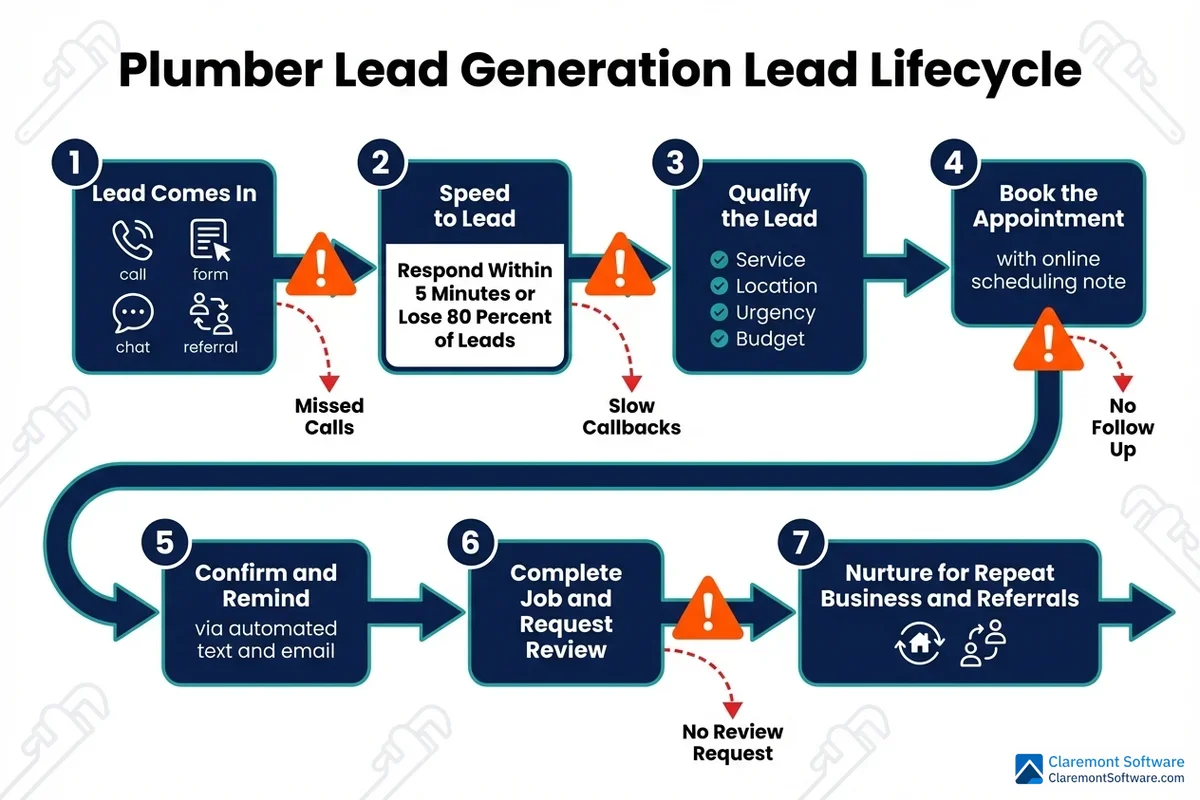
The first plumber to respond to an inquiry wins the job more often than not. Automated follow-up sequences ensure that every new lead receives an immediate response — even at 11 PM on a Sunday — without requiring anyone on your team to be watching an inbox. Set up triggers so that a form submission, a missed call, or a chatbot inquiry automatically fires a response within minutes. That speed signals professionalism, builds trust, and keeps you ahead of every competitor who's still relying on manual follow-up.
Social Media and Video Marketing That Builds Trust
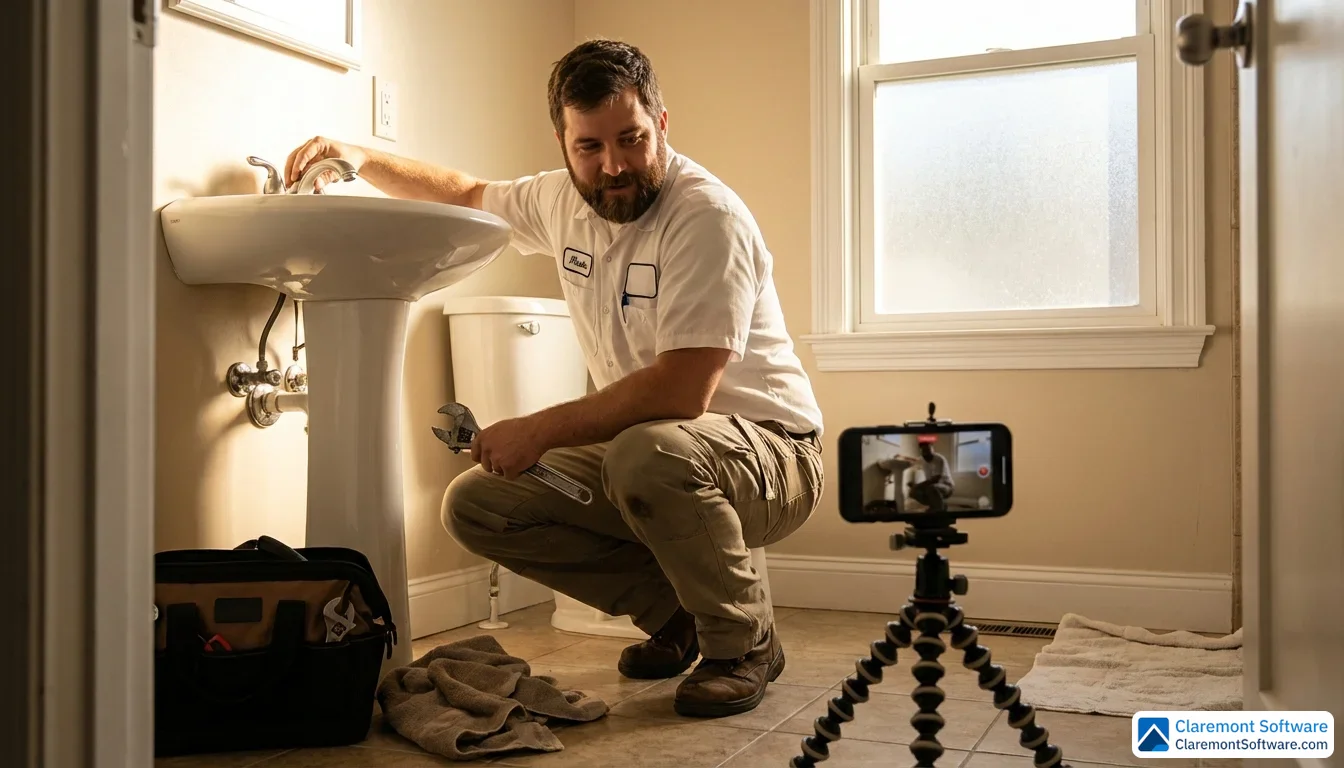
With 4.8 billion social media users worldwide, the question for plumbing businesses in 2026 isn't whether to show up on social platforms — it's where to show up and what to say when you get there.
The mistake most plumbers make is spreading themselves thin across every platform and posting inconsistently. A better approach is to go deep on the platforms where homeowners in your service area are actually spending time and making local decisions.
Show Up Where Homeowners Are Already Talking
Neighborhood community apps are among the most underutilized tools in plumbing social media marketing. These hyper-local platforms are where homeowners ask each other for contractor recommendations, warn neighbors about service issues, and share experiences with local businesses — often by name. An active, helpful presence in these spaces puts your business directly in front of people who are already primed to hire a local plumber. Engage genuinely: answer questions, offer quick tips, and let your expertise do the selling without being overtly promotional.
Short-form video platforms, meanwhile, are where brand awareness gets built at scale. A 60-second video showing a before-and-after drain cleaning, a quick tip on how to shut off a home's main water valve, or a behind-the-scenes look at your team arriving on a job humanizes your business in a way that no ad copy ever could.
Create Video Content That Earns Trust Before the Call
Video content consistently retains more viewer attention than static posts — and for a service business built on trust, that attention is everything. The content types that perform best for plumbers are straightforward:
- Before-and-after project showcases that demonstrate the quality of your work visually
- Quick plumbing tip videos that position you as a knowledgeable local expert
- Behind-the-scenes team content that shows the people behind the business — uniforms, trucks, and all
You don't need a production crew. A smartphone, decent lighting, and a willingness to hit record is enough to start.
Optimize Video for Search, Not Just Views
Here's where most plumbers leave leads on the table: they post videos without optimizing them for discovery. Homeowners regularly search phrases like "how to fix a leaking faucet" or "why is my water heater making noise" on video platforms — and those searches lead directly to service calls when the viewer realizes the fix is beyond their comfort level. Use keyword-rich titles, detailed descriptions, and relevant tags on every video you publish to capture that search traffic and convert curious viewers into booked jobs.
Use Paid Social to Target Your Exact Neighborhood
Paid advertising on community-focused platforms allows you to target by specific neighborhood or zip code — a level of precision that's ideal for plumbing businesses with defined service areas. A well-placed sponsored post promoting a seasonal drain inspection special, targeted to homeowners within five miles of your base, can generate warm local leads at a fraction of the cost of broader digital advertising.
Lead Generation Services: When to Buy Leads (And When to Walk Away)
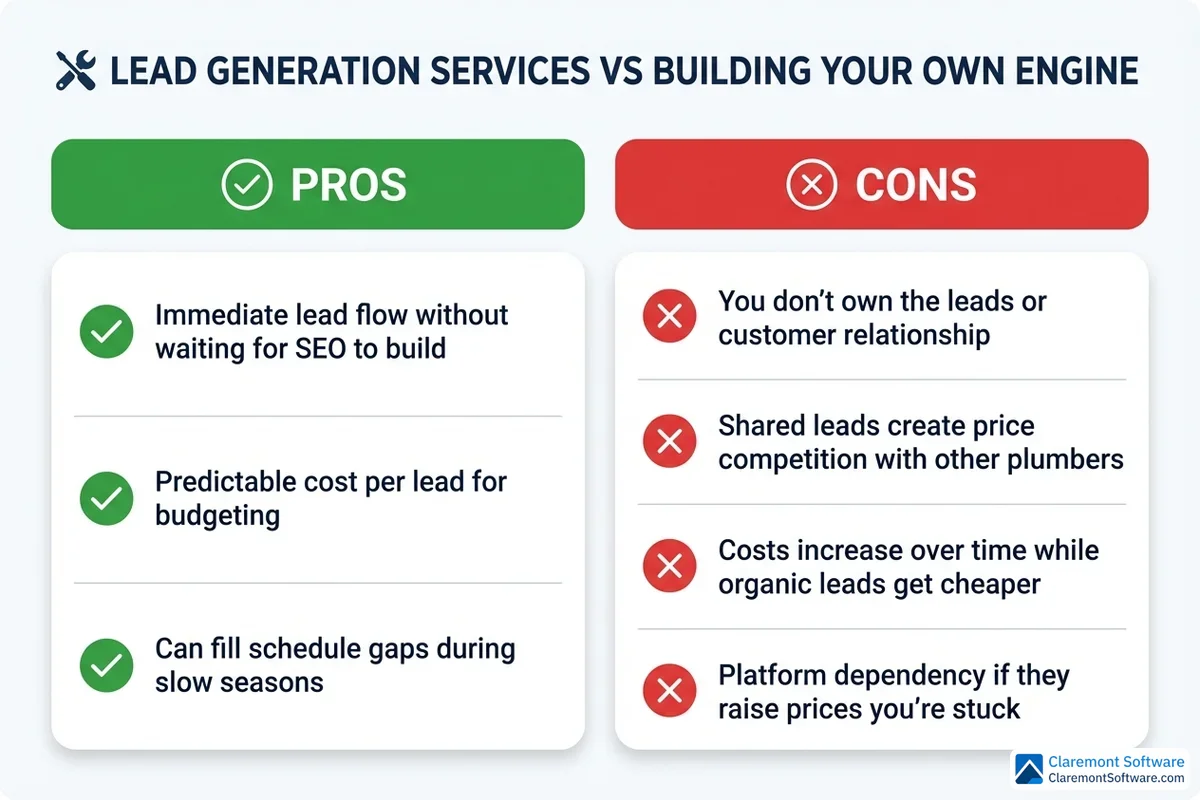
Third-party lead generation platforms can feel like a lifeline when your schedule has gaps and the phone isn't ringing. And in the right circumstances, they genuinely are. But there's a critical distinction between using purchased leads as a short-term pipeline supplement and becoming dependent on them as your primary source of new business. One is a smart tactical move. The other is a trap that keeps you paying indefinitely for customers you'll never truly own.
You're Renting Leads, Not Building Equity
Every dollar you spend on a lead generation platform produces a result that disappears the moment you stop paying. There's no compounding return, no brand equity, and no long-term asset being built. Compare that to a well-optimized website or a strong review profile — both of which continue generating inbound leads for years without ongoing spend. Purchased leads have their place, but they should always be a bridge toward owned channels, not a substitute for them.
Understand What You're Actually Buying
Not all purchased leads are created equal, and the difference between lead types has a direct impact on your conversion rate and profitability.
- Exclusive leads ($35–$150 per call, depending on your market, service type, and competition level) are sent to one plumber only. You're not racing anyone to the phone. These convert at significantly higher rates and are worth the premium when the math works out.
- Shared leads ($25–$50 per lead) are distributed to as many as 10 competing plumbers simultaneously. By the time you call, the homeowner has already heard from two or three other companies — and the conversation immediately becomes about price. Margins erode fast.
Evaluate Every Platform Before You Commit
Before signing up with any lead service, run it through four questions:
- Are the leads exclusive or shared? If shared, how many competitors receive the same lead?
- How precise is the geographic targeting? Leads outside your service area waste time and money.
- What's the return policy for bad leads? Disconnected numbers, duplicate contacts, and out-of-area requests should be creditable — any reputable platform will have a clear policy.
- Is there a long-term contract? Avoid platforms that lock you in before you've had a chance to evaluate lead quality firsthand.
Track Cost-Per-Acquisition, Not Just Cost-Per-Lead
A $40 lead that converts at 50% costs you $80 per booked job. A $20 lead that converts at 10% costs you $200. The only number that actually matters is what you're paying to acquire a paying customer — and you can't calculate that without tracking every lead from source to signed invoice. Use your CRM or field service software to log where every lead came from and whether it resulted in booked revenue. That data lets you compare purchased leads directly against your organic channels and make budget decisions based on actual returns rather than assumptions.
The long-term goal is straightforward: use purchased leads to fill gaps while you build the SEO, review volume, and referral relationships that generate inbound leads you own permanently. When your owned channels are strong enough to keep your schedule full, the lead platforms become optional — and that's exactly where you want to be.
Offline Strategies That Still Work (And How to Track Them)
Digital marketing gets most of the attention in 2026 — and rightfully so. But writing off offline strategies entirely is a mistake that leaves real leads on the table, particularly in the suburban and tight-knit neighborhood markets where plumbing businesses do a significant share of their work.
The difference between offline marketing that works and offline marketing that wastes money comes down to one word: trackability.
Visibility That Works While You Work
Your service vehicles are moving billboards that log miles through your target service area every single day. A professionally designed truck wrap — clean, readable, and featuring your phone number prominently — generates passive impressions in every neighborhood you service. Yard signs placed at job sites (with homeowner permission) do the same thing at a hyper-local level, putting your brand directly in front of neighbors who already know someone on their street just hired a plumber. Door hangers distributed in the blocks surrounding a completed job capitalize on that same proximity effect: if you just fixed a water heater on Maple Street, there's a reasonable chance someone two doors down has the same aging unit.
These tactics are especially effective in suburban markets where neighbors pay attention to which contractors are working nearby.
Make Every Offline Touchpoint Measurable
Here's where most plumbing businesses leave money on the table: they run offline campaigns with no way to know whether they're working. In 2026, that's entirely avoidable. Assign a unique tracking phone number to each offline channel — one for truck wraps, one for door hangers, one for yard signs — so you can see exactly which physical touchpoints are generating calls. Add QR codes to printed materials that route to a dedicated landing page, giving you digital attribution for an offline impression. This isn't complicated to set up, and it transforms offline marketing from a gut-feel expense into a measurable line item you can evaluate against your other channels.
Build Authority Through Community Presence
Offering free plumbing inspections or hosting a short educational workshop at a local community center positions you as the neighborhood expert rather than just another contractor. Homeowners who learn something useful from you — how to spot early signs of pipe corrosion, when to call a professional versus attempting a DIY fix — remember your name when a real problem surfaces. These warm leads convert at a higher rate than cold outreach because trust is already established before the first call.
Sponsoring local sports teams, school fundraisers, or community charity events compounds that brand recognition over time. Your logo on a youth soccer jersey or a Little League scoreboard doesn't generate an immediate flood of calls, but it builds the kind of familiarity that makes homeowners reach for your number first when something goes wrong — and recommend you to a neighbor without hesitation.
Close the Loop Online
Every offline touchpoint should have a clear path to your digital presence. Print materials should reference your review profile or website. Sponsorship signage should include your web address. The goal is to move prospects from an offline impression to an online action — whether that's reading your reviews, filling out a contact form, or saving your number — so that your offline investment feeds directly into the digital ecosystem you're already building.
Measuring ROI and Eliminating Lead Leakage
Every marketing dollar you spend on plumbing leads is either building your business or bleeding out quietly — and most plumbing companies don't know which one is happening because they're not measuring the right things.
The principle is simple: if you can't measure it, you can't improve it. That means tracking cost-per-lead and cost-per-acquisition for every single channel — SEO, PPC, Local Services Ads, referrals, and any purchased lead services you're running. Not just which channels generate the most leads, but which channels generate the most revenue relative to what you're spending. A channel that delivers 50 leads a month at $10 each is worthless if none of them book. A channel that delivers 10 leads at $60 each and converts 8 of them is a growth engine.
Lead Leakage Is Costing You More Than You Think
Here's the uncomfortable truth: most plumbing businesses don't have a lead generation problem — they have a lead retention problem. Lead leakage is the silent killer of plumbing marketing ROI. It happens every time a call goes unanswered, a form submission sits in an inbox for three hours, or a follow-up never gets made because the job was busy. You've already paid to generate that lead. Losing it at the phone stage or the booking stage means you've paid for nothing.
Speed-to-lead is particularly brutal in plumbing. Research consistently shows that the first contractor to respond wins the job the majority of the time — and in emergency situations, homeowners aren't waiting around for callbacks. Every missed call is a competitor's booked job.
Call Tracking Reveals What Your Gut Can't
Implement call tracking and recording across all your marketing channels. This gives you hard data on how many inbound leads your team is actually converting versus losing at the phone stage. You may discover that your ads are performing well but your booking rate is dragging down your overall ROI — a problem that's fixable with better call handling or scripting, not more ad spend. Assign unique tracking numbers to each channel so you can attribute every call to its source with precision.
Centralize Everything in One System
A field service management platform or CRM is non-negotiable once you're running multiple lead channels simultaneously. Without a centralized system, leads fall through the cracks, follow-ups get forgotten, and your reporting is based on guesswork. The right software lets you log every lead by source, automate follow-up sequences, and generate reports that show you exactly which channels are delivering booked revenue — not just inquiries.
Build a Monthly Marketing Review Cadence
Set aside time each month to analyze lead volume, conversion rates, and revenue by source. Compare your channels side by side. If your referral program is delivering a lower cost-per-acquisition than your paid ads, that's a signal to invest more in referral relationships. If one lead service is consistently underperforming, cut it and reallocate that budget. This monthly discipline is what separates plumbing businesses that scale intentionally from those that keep spending on instinct and hoping for better results.
Scaling Your Strategy: Solo Plumber vs. Multi-Truck Operation
The strategies covered throughout this guide aren't one-size-fits-all — and applying a multi-truck operation's marketing playbook to a solo plumbing business is a fast way to burn through budget you can't afford to lose. Where you are in your business growth determines which tactics deserve your attention first.
Solo Plumbers: Build the Foundation Before Spending a Dollar on Ads
If you're running a one-person operation, your highest-leverage moves cost more time than money. Start with your Google Business Profile — optimize every field, add photos consistently, and make sure your service area is accurately defined. Then build a systematic process for requesting reviews after every completed job. These two steps alone can generate a steady stream of inbound leads in markets where competitors haven't bothered to do the basics. Layer in a simple referral program — even a handwritten thank-you card with a referral incentive — to turn satisfied customers into a word-of-mouth engine. Master these fundamentals before touching paid advertising.
Small Teams (2–5 Trucks): Layer In Paid Channels and Automation
Once you have consistent revenue and a small team, it's time to amplify what's working. A professionally optimized website with dedicated service pages gives your paid campaigns somewhere worth sending traffic. Add PPC or Local Services Ads to capture high-intent searches your organic presence isn't yet reaching. Implement email and SMS automation so leads who don't book immediately get nurtured rather than forgotten. At this stage, speed-to-lead and follow-up consistency become critical — automation handles both without adding headcount.
Larger Operations: Invest in Owned Channels and Strategic Partnerships
Multi-truck operations should be building marketing assets they own outright — comprehensive SEO, video content, and channel partnerships with property managers, HOAs, and commercial clients. At this scale, dedicated marketing staff or agency support pays for itself by freeing your team to focus on operations while specialists drive lead volume. Purchased leads should represent a shrinking percentage of your pipeline as organic and referral channels mature.
Plan Around the Seasons
Regardless of size, build a seasonal marketing calendar. Ramp up emergency-focused messaging before winter freeze season when burst pipes spike. Promote maintenance plans in spring and fall when homeowners are thinking proactively. Use slower summer months for brand-building content and community presence that pays dividends year-round.
The ultimate goal — at every stage — is generating inbound leads through brand equity you own permanently, rather than traffic you rent through ad spend. That's where long-term profitability lives.
Conclusion
The most successful plumbing businesses in 2026 won't be the ones with the biggest ad budgets — they'll be the ones that built systems. Local SEO, paid advertising, review management, referrals, and automation aren't competing strategies; they're interconnected layers of a lead generation engine that compounds over time.
Start where the leverage is highest: optimize your business profile, build a website that converts, and systematize review collection before spending a dollar on ads. Then eliminate the lead leakage that's quietly draining your ROI — missed calls, slow follow-up, and untracked sources cost more than most plumbers realize.
Scale your approach to match your business size, always working toward the long-term goal of generating inbound leads through brand equity you own permanently rather than traffic you rent indefinitely.
As your operation grows and your lead channels multiply, centralizing everything in one place becomes essential. Tools like Claremont Software are built to help plumbing businesses do exactly that — tracking leads, automating follow-up, and giving you the visibility to make smarter marketing decisions at every stage of growth.
The leads are out there. Build the system that captures them.
Related Reading
- Plumber Advertising: What Works in 2026
- Google Business Profile for Plumbers: Complete Guide
- Best Plumber Websites 2026: Examples That Generate Calls
Frequently Asked Questions
How much do plumbing leads cost in 2026?
Plumbing lead costs vary significantly depending on the type and source. Shared leads from third-party platforms typically run $25–$50 per lead, but that same lead is simultaneously sent to up to 10 competing plumbers. Exclusive leads — sent only to your business — cost more, ranging from $35–$150 per call depending on your market, the service type, and local competition levels. Pay-per-click ads on Google can cost $15–$50 per click for competitive plumbing keywords. The most cost-effective leads, however, are the ones you generate organically through local SEO, reviews, and referrals — these carry no direct cost per lead and deliver the highest long-term ROI.
What is the difference between exclusive and shared plumbing leads?
Exclusive leads are sent to only one plumber, giving you a direct shot at the job with no competition from other contractors. Shared leads, by contrast, are sold to multiple plumbers simultaneously — sometimes as many as 10 — for the same job request. This forces you to compete on price and speed, often driving down your margins. While shared leads are cheaper upfront ($25–$50 each), their lower conversion rates and race-to-the-bottom pricing make them less profitable over time. Exclusive leads cost more ($35–$150 per call) but deliver higher conversion rates, better customer relationships, and stronger long-term brand equity.
How can I get free plumbing leads without paying for advertising?
Several high-impact strategies can generate plumbing leads at no direct cost. Start by fully optimizing your Google Business Profile — complete every field, add photos regularly, and post updates to improve your visibility in local map results. Build city-specific service pages on your website targeting long-tail keywords to capture organic search traffic. Systematically collect customer reviews after every completed job, since strong review profiles drive inbound calls without any ad spend. Launch a referral program to turn satisfied customers into a word-of-mouth engine. You can also engage your local community through neighborhood apps and social media. These owned channels take time to build but generate leads you don't have to keep paying for.
What is the best marketing strategy for a solo plumber on a tight budget?
For solo plumbers with limited budgets, focus on the highest-impact, lowest-cost strategies first. Begin with your Google Business Profile — it's free and directly influences how often you appear in local map searches. Next, build a simple, mobile-friendly website with your service area, a click-to-call button, and a booking form. Then create a consistent process for requesting reviews after every job, since 90% of consumers use the internet to find local businesses and reviews heavily influence their decisions. Finally, set up a basic referral program offering a small incentive to customers who send new business your way. These three pillars — profile optimization, reviews, and referrals — can fill a solo plumber's schedule before spending a dollar on ads.
How do I optimize my Google Business Profile to rank higher in local map results?
Start by completing every section of your profile: business name, address, phone number, website, hours, and service categories. Choose the most accurate primary category (e.g., "Plumber") and add relevant secondary categories. Upload high-quality photos of your team, trucks, and completed work, and add new photos regularly. Post updates, offers, or tips at least weekly to signal activity to Google. Collect and respond to reviews consistently — both volume and recency matter for rankings. Ensure your Name, Address, and Phone Number (NAP) are identical across every online directory, since even small inconsistencies can hurt your local search visibility. Never use a fake or virtual address, as this can result in profile suspension.
How fast do I need to respond to a plumbing lead to win the job?
Speed is one of the most critical factors in converting plumbing leads — especially for emergency calls. The general rule is simple: the first plumber to respond wins the job. Homeowners dealing with a burst pipe or backed-up drain are not waiting around to compare quotes; they're calling the first available professional. For non-emergency leads submitted via web forms or chat, response time still matters enormously — leads contacted within the first few minutes convert at dramatically higher rates than those followed up hours later. Use SMS automation, AI chatbots, and call forwarding to ensure every lead gets an immediate response, even outside business hours.
Are lead generation services worth it for plumbing companies?
Lead generation services can be a useful short-term tool to fill your pipeline, but they come with real trade-offs. Shared lead platforms send the same job request to multiple competitors, driving down your close rate and profit margins. Exclusive lead services offer better conversion rates but at a higher cost per call. The key is to evaluate any service on four criteria: lead exclusivity, geographic targeting accuracy, their policy for refunding bad or invalid leads, and whether you're locked into a long-term contract. Most importantly, treat purchased leads as a supplement — not a foundation. The long-term goal should be building owned channels like SEO, reviews, and referrals that generate leads without ongoing fees.
How do I track which marketing channels are generating the most plumbing leads?
Tracking starts with assigning a unique phone number to each marketing channel — your website, truck wrap, yard signs, and any paid campaigns should each have a distinct number so you can see exactly where calls originate. Use call tracking software to record and analyze inbound calls, and set up UTM parameters on your digital ads to track form submissions in Google Analytics. A CRM or field service management platform lets you log every lead's source, track it through to a booked job, and calculate your true cost-per-acquisition by channel. Review this data monthly, comparing lead volume, conversion rates, and revenue by source. Then reallocate your budget toward the channels delivering the best return.